Supported Accommodation for Growth, Identity and Belonging
A structured response to isolation and identity challenges
In Manchester, many young people under 25 face instability, low confidence and limited access to positive role models. At the same time, many adults over 50 experience isolation and reduced social participation. Valuable cultural knowledge risks being lost.
Ensemble’s Generations House addresses these challenges through a structured supported accommodation model combined with an intergenerational development programme.
The initiative is led by Ensemble Manchester. It is designed as a safe living environment where young people and older adults connect through heritage, mentoring and life skills development.
A dual impact model
Generations House is built on two pillars.
- Safe supported living
Residents benefit from structured accommodation with supervision, safeguarding policies and personalised development plans. - Intergenerational engagement
Young residents and adults 50 plus participate in structured mentoring and shared cultural activities. This creates purposeful relationships based on knowledge exchange and mutual support.
Clear objectives
The programme aims to:
• Strengthen identity and confidence among young residents
• Reduce social isolation among older participants
• Preserve and document cultural heritage
• Improve employability and life skills
• Strengthen community cohesion in Manchester
Structured activities with measurable outcomes
Activities are not informal gatherings. Each is linked to defined learning and social outcomes.
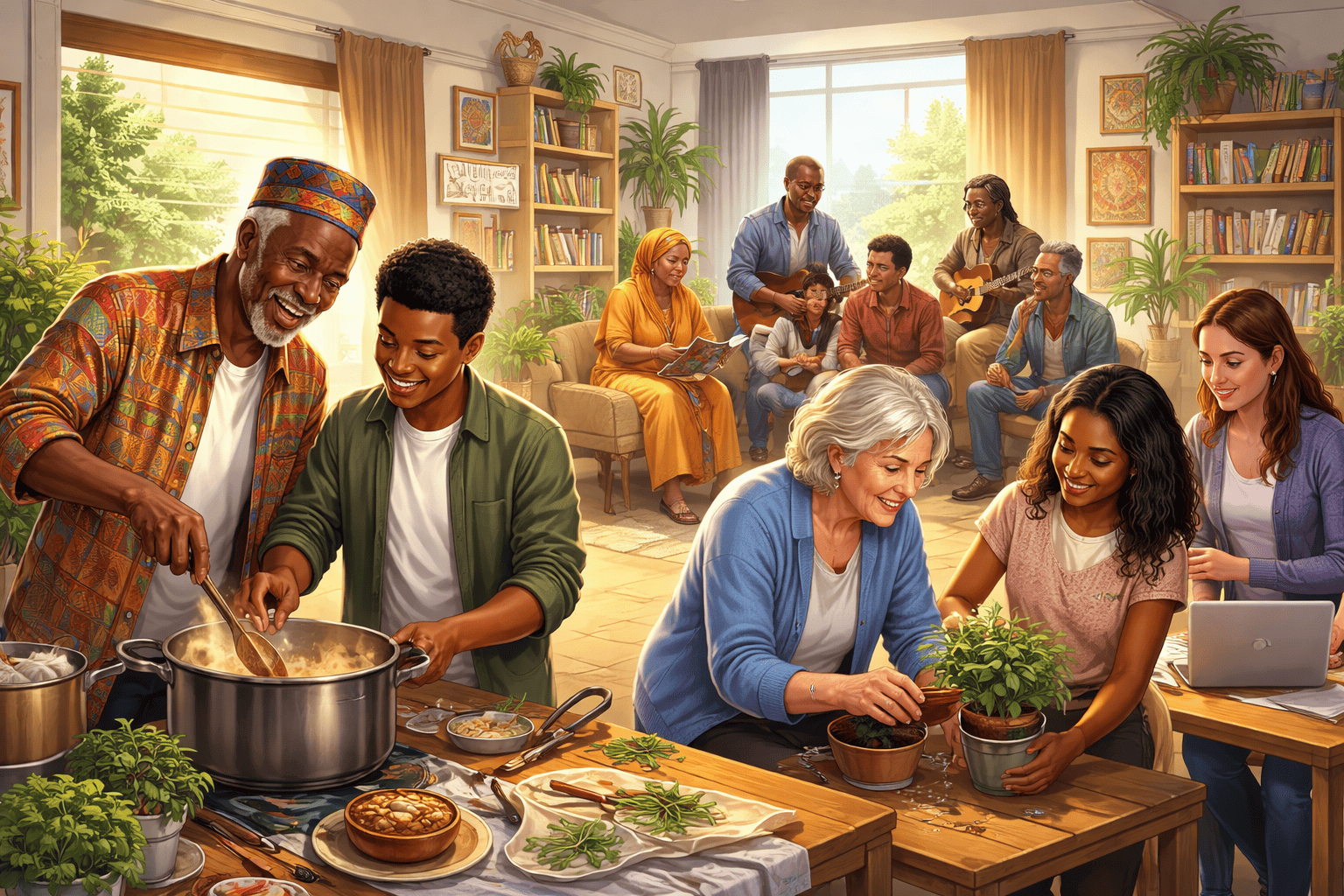
Cultural and heritage activities include:
• Cooking and traditional food heritage
• Language sessions and storytelling
• Art and creative expression
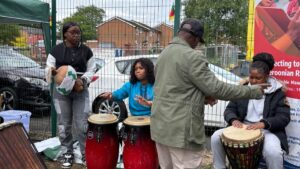
• Music and song traditions
• Literature and oral history documentation
• Cultural dress and fashion heritage
• Gardening and nature based activities
• Exploration of rituals and ceremonies
• Digital heritage archiving
Each activity supports transferable skills.
Cooking sessions develop teamwork and planning skills.
Storytelling workshops strengthen communication and literacy.
Digital archiving builds technical skills.
Intergenerational mentoring reinforces confidence and responsibility.
Employment and life skills support
Beyond cultural engagement, the programme integrates employability support.
• CV writing and interview preparation
• Basic financial literacy
• Time management and goal setting
• Practical skills linked to heritage activities
For example, participants involved in digital archiving gain experience in documentation, data organisation and content management. These skills align with entry level roles in community services and cultural organisations.
Impact framework
The programme is designed with measurable indicators.
Annual targets include:
• Number of young residents supported
• Number of adults 50 plus engaged in mentoring roles
• Participation rate in structured weekly activities
• Documented progression into employment, training or volunteering
• Reduction in reported feelings of isolation among older participants
• Volume of documented cultural materials archived
Data collection includes attendance tracking, skills progression reviews and participant feedback surveys.
Governance and safeguarding
Ensemble Manchester operates with clear governance structures, financial oversight and safeguarding procedures. Supported accommodation standards are embedded in operational policy.
The programme includes:
• Defined roles and responsibilities
• Risk management protocols
• Transparent financial reporting
• Monitoring and evaluation processes
Sustainability strategy
Generations House is designed as a long term model.
Sustainability is based on:
• Diversified funding streams
• Partnerships with local authorities and community organisations
• Volunteer engagement
• Structured evaluation to demonstrate outcomes
By combining supported accommodation with cultural and intergenerational programming, the model addresses housing, social isolation and identity development within one integrated framework.
Why investment matters
Early intervention reduces long term social costs linked to unemployment, poor mental health and social exclusion.
Intergenerational engagement reduces isolation among older adults and strengthens informal support networks.
Cultural preservation strengthens belonging and social cohesion within diverse urban communities.
Generations House offers a replicable model that integrates housing, heritage and skills development in one coordinated approach.
Partnership opportunity
Ensemble Manchester invites public bodies, trusts and private funders to support the development and scaling of Generations House.
Investment will support:
• Safe accommodation provision
• Structured intergenerational programming
• Skills and employability training
• Monitoring and evaluation systems