Connecting Heritage, Identity and Community Across Generations
Cultural heritage is more than the preservation of objects from the past. It is the transmission of knowledge, values and identity that enables communities to understand who they are and where they are going. For the Cameroonian diaspora in Greater Manchester, this heritage lives through stories, languages, traditions, ceremonies and symbolic artistic expressions that continue to shape family and community life.
The Connecting to Our Cameroonian Roots project, led by Ensemble Manchester, places these lived experiences at the Centre of a long-term heritage programme designed to document migration histories, strengthen Unity, intergenerational dialogue and preserve the intangible cultural heritage of Cameroonians living in the Greater Manchester and United Kingdom.
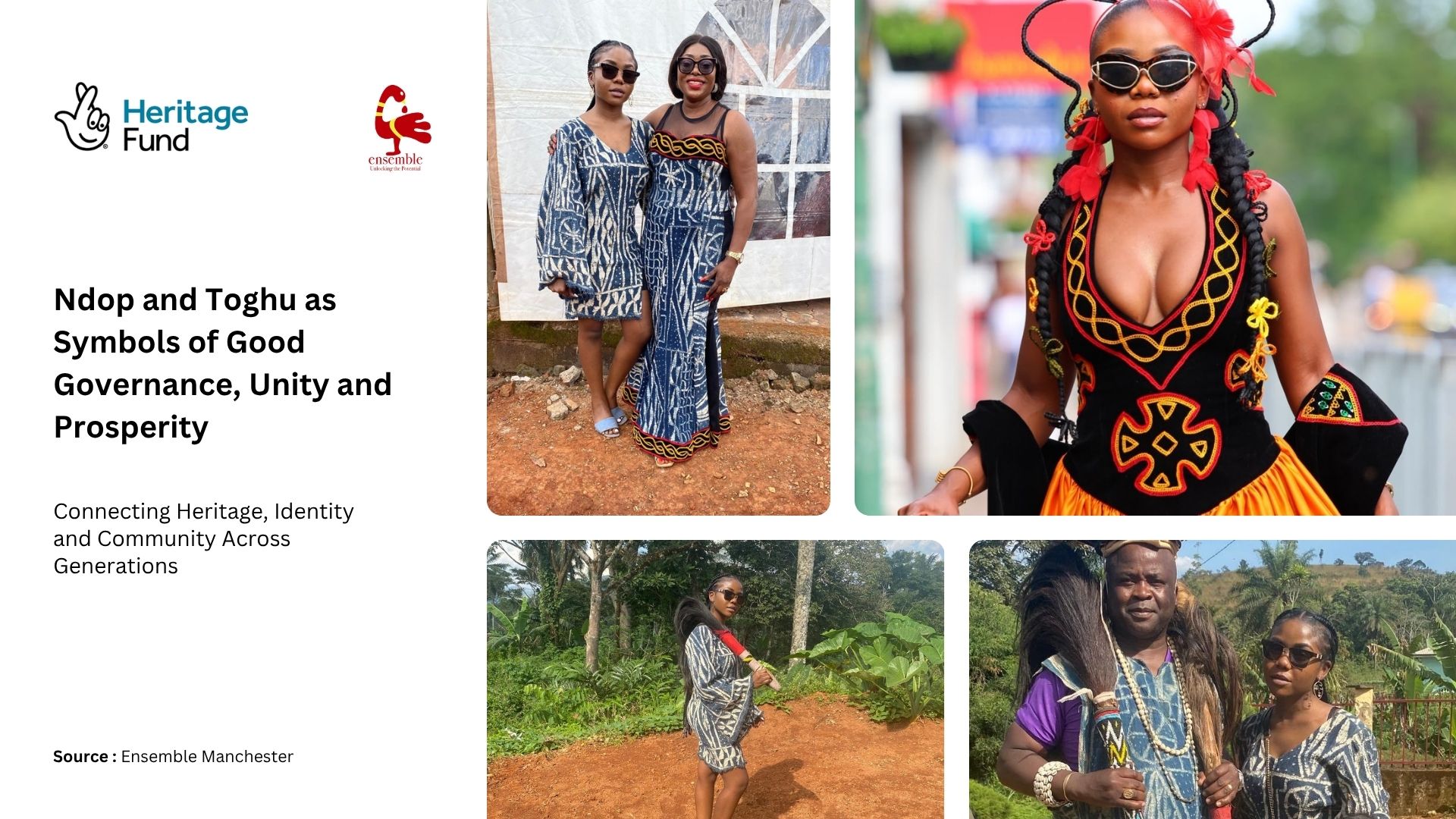
Among the most recognisable expressions of this heritage are Ndop and Toghu, two textiles whose meanings extend far beyond fashion. They communicate identity, authority, responsibility and collective values that have travelled with generations of migrants and continue to inspire new forms of creativity and community engagement today.
Preserving a Living Heritage
For many first-generation Cameroonians who arrived in Britain during the 1960s and the decades that followed, tribal gatherings, janguy , cultural traditions of playing Football and organizing annual family fun day during summer became an anchor in unfamiliar surroundings. Through Ensemble French Supplementary School, language, music, Food, Clothing, and family ceremonies helped maintain links with home while supporting adaptation to life in a multicultural society.
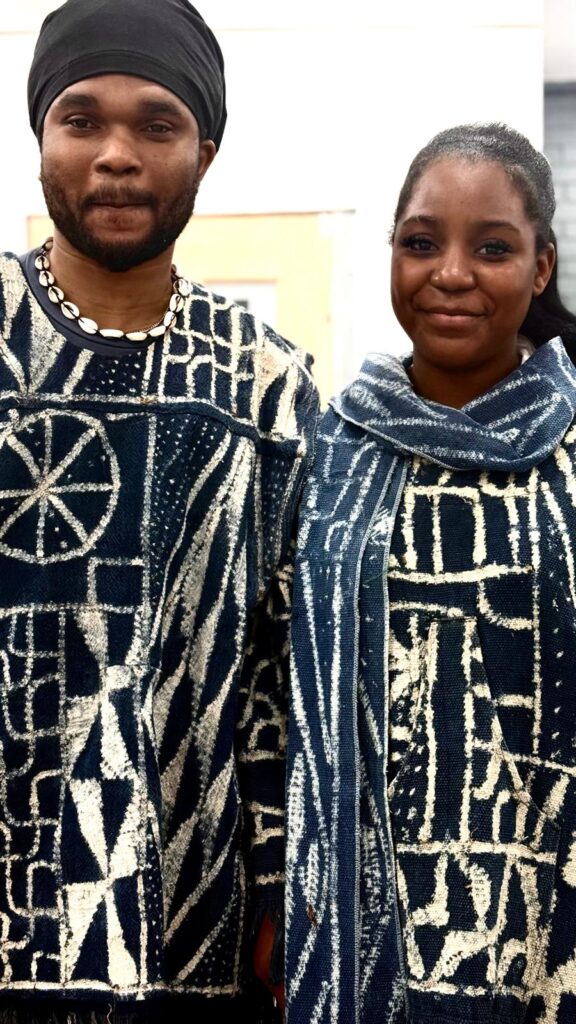
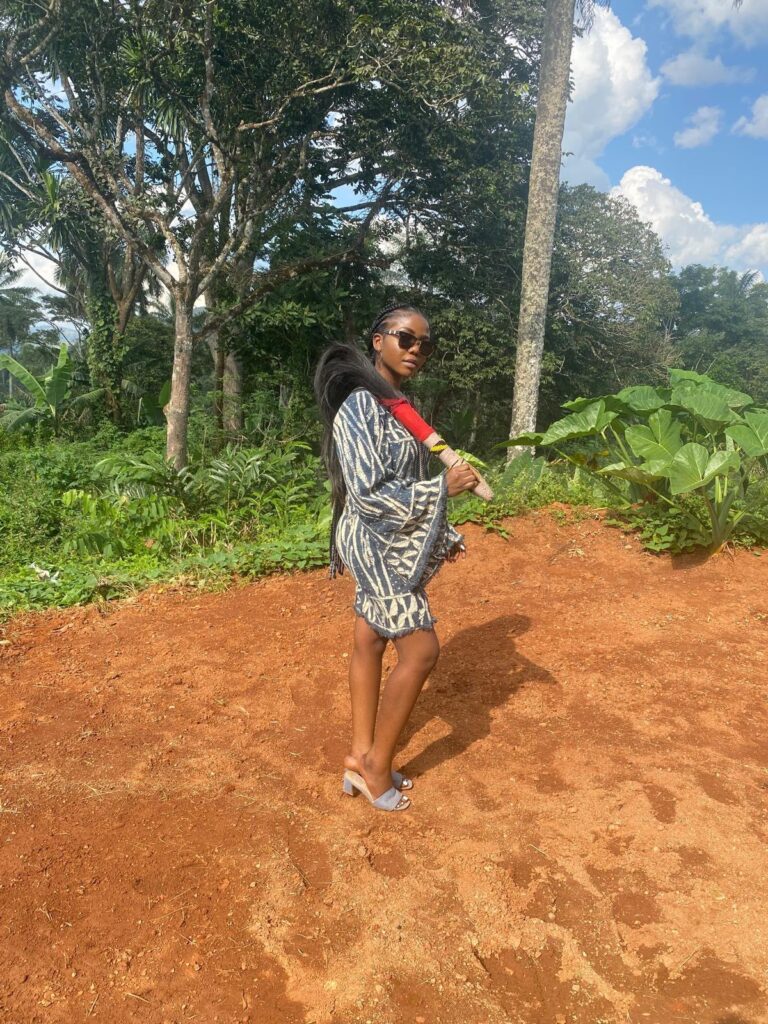
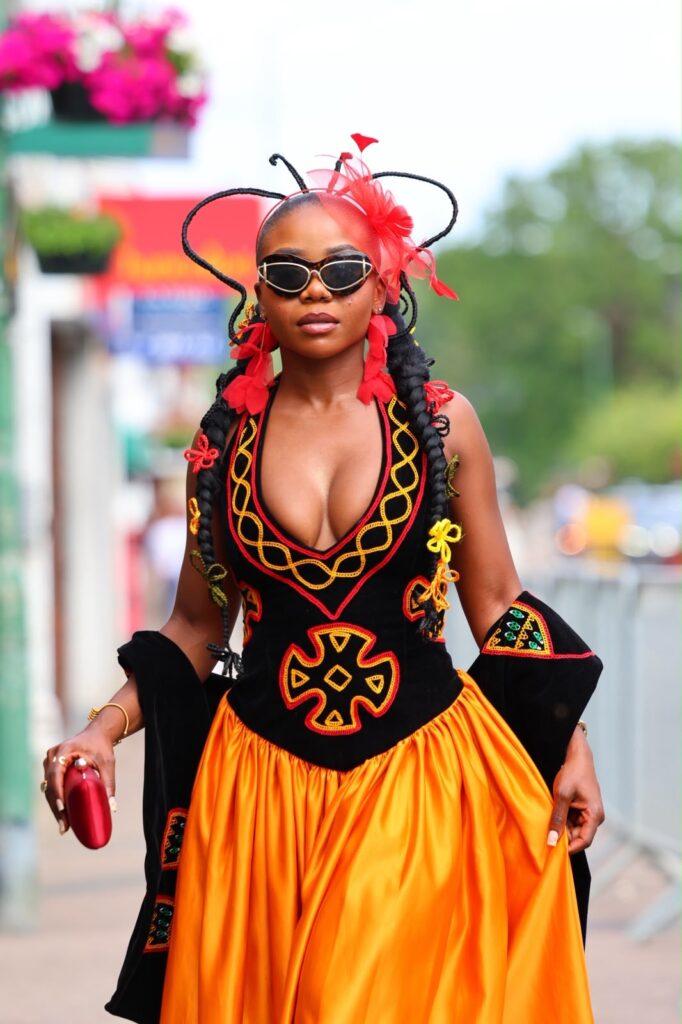
Ndop, traditionally associated with the Bamoun and Bamileke cultural regions, is distinguished by geometric motifs and symbolic patterns that communicate social values and historical narratives. Toghu, recognised through its elaborate embroidery and vibrant decoration, represents prestige, respect and cultural pride. Both textiles continue to occupy an important place during ceremonies, family celebrations and public cultural events.
Within the diaspora, these fabrics became visual reminders of belonging and continuity. They allowed families to preserve cultural identity while building new lives in British cities including Manchester.
Symbols of Leadership and Collective Responsibility
Throughout Cameroonian history, textiles have communicated more than aesthetic preferences. Patterns and colours have reflected status, responsibility and social values.
Ndop and Toghu can be interpreted as expressions of leadership rooted in service, accountability and community cohesion. They also embody ideas of prosperity achieved through collective effort rather than individual success alone.
The Roots to Unity Exhibition explores these symbolic dimensions by encouraging visitors to reflect on how heritage can contribute to discussions about good governance, civic participation and shared responsibility within contemporary multicultural communities.
By presenting traditional symbols alongside personal migration stories, the exhibition demonstrates that heritage remains relevant to present day social challenges.
Migration Stories That Shaped a Community
The exhibition is grounded in extensive desktop research and oral history interviews collected from members of the Cameroonian community who established themselves in Britain after independence.
These testimonies document experiences of education, employment, settlement and family life while highlighting the importance of preserving cultural traditions across generations.
Participants describe arriving with limited resources but carrying invaluable cultural knowledge that became the foundation for community organisations, religious groups and social networks.
Their memories illustrate resilience and determination while documenting an important chapter in the history of Greater Manchester that remains under represented within mainstream heritage collections.
Community Participation at the Heart of Heritage
Rather than presenting heritage as a static display, the Roots to Unity Exhibition transforms visitors into active participants.
Interpretation panels explain the historical significance of traditional symbols.
Photographic collections document migration journeys and community celebrations.
Traditional garments demonstrate craftsmanship passed through generations.
Artefacts provide tangible links with family histories.
Recorded interviews allow visitors to hear authentic voices describing lived experiences.
Interactive storytelling sessions invite younger participants to ask questions and engage directly with elders whose memories form the foundation of the archive.
This participatory approach reflects current best practice in community heritage by recognising lived experience as an essential historical resource.
CamFest and the Evolution of Sustainable Fashion
Heritage continues to evolve through creativity.
Following community engagement activities associated with Connecting to Our Cameroonian Roots, younger participants have explored innovative ways to preserve tradition while responding to contemporary environmental concerns.
CamFest has become an important platform for celebrating Cameroonian identity through music, arts and fashion.
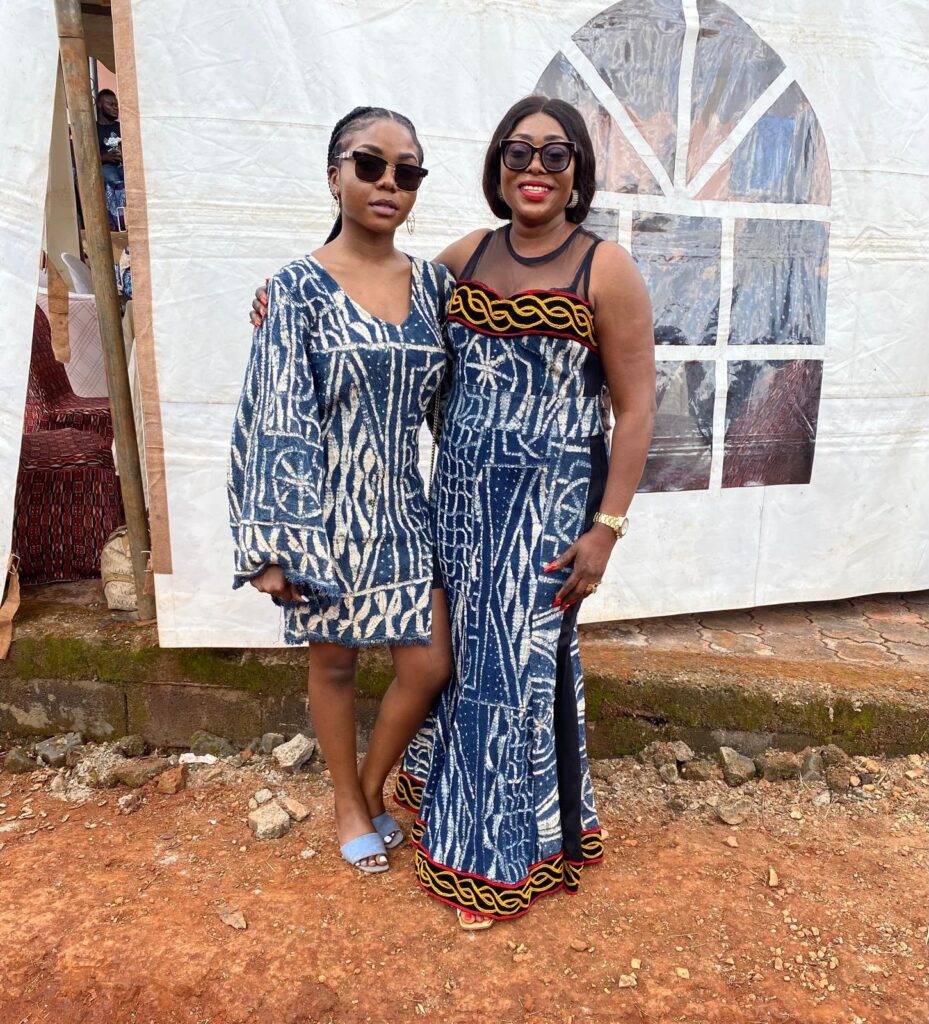
Building upon this momentum, CamerFashion due to take place on the 29th August 2026 will demonstrate how Ndop and Toghu inspire sustainable Fashion that respect traditional craftsmanship while encouraging responsible production and creative entrepreneurship.
Emerging designers such as Nguisa working with residents of Miles Platting and young people of Ensemble Manchester to reinterpret cultural motifs through recycled materials, ethical production methods and contemporary aesthetics without losing the historical meaning embedded within the original textiles.
This dialogue between tradition and innovation ensures that heritage remains relevant for younger generations.
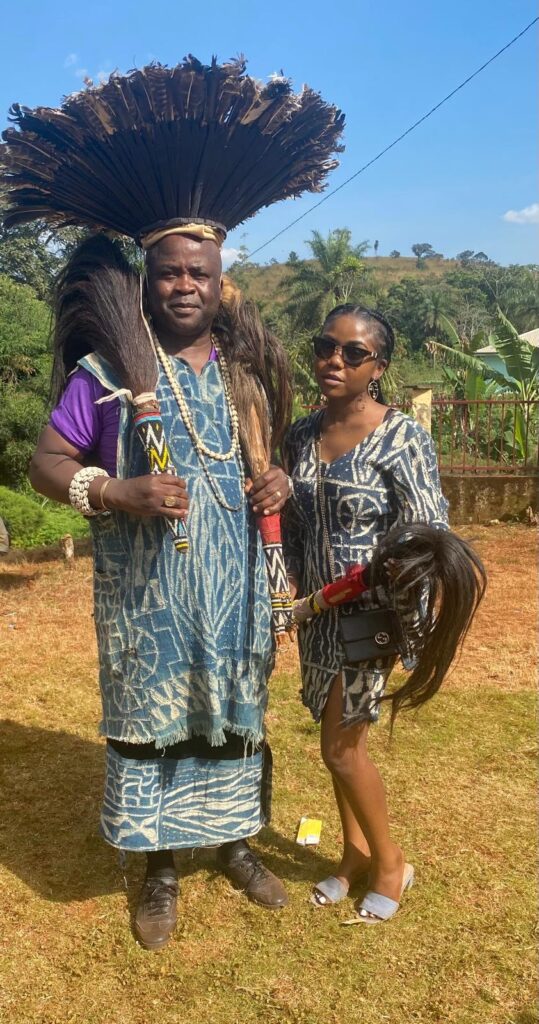
Heritage Supporting Environmental Awareness
Sustainable fashion represents another dimension of heritage preservation.
Traditional textiles were historically valued, repaired and transmitted across generations rather than treated as disposable products.
Revisiting these practices encourages reflection on responsible consumption and environmental stewardship.
Visitors discover that protecting heritage and protecting natural resources share common values centered on respect, continuity and responsibility.
Elders, professional and the younger Generation.
Community elders contribute personal stories and historical knowledge
Professional’s shape community knowledge
The younger generation research, explore and preserve heritage from the initial Unity and community in Football celebrating Cameroonian Heritage
Researchers support documentation and contextual interpretation.
Volunteers assist with interviews, visitor engagement and archive preparation.
Artists translate heritage into accessible visual experiences.
Designers reinterpret traditional motifs while maintaining authenticity.
Families contribute photographs, garments and documents preserved across generations.
Together they build a collective archive that belongs to the community while remaining accessible to future researchers, educators and students.
Encouraging Dialogue Across Generations
Many young people born in Britain experience questions about identity and belonging.
The exhibition provides opportunities to reconnect with family history through direct conversations with older generations.
These exchanges reduce stereotypes, strengthen mutual understanding and create spaces where lived experience becomes a shared educational resource.
For elders, participation offers recognition and the opportunity to transmit knowledge accumulated over decades.
For younger participants, heritage becomes something lived rather than something observed.
The resulting dialogue strengthens family relationships while reinforcing community cohesion.
Lasting Educational and Social Impact
The anticipated outcomes extend beyond the exhibition itself.
Participants gain stronger cultural confidence.
Intergenerational relationships become more meaningful.
Oral histories are preserved before they disappear.
Schools gain access to educational materials reflecting local migration histories.
Universities benefit from community based research resources.
Public understanding of the contribution made by Cameroonians to British society increases.
Volunteers develop research, interviewing and archival skills.
Community participation expands through inclusive cultural activities.
These outcomes align closely with priorities shared by many heritage organisations that seek measurable public benefit through participation, learning and inclusion.
Building a Permanent Legacy
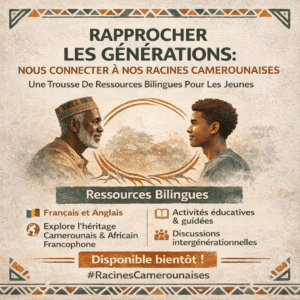
The oral history interviews, desktop research findings and exhibition materials generated through Connecting to Our Cameroonian Roots will contribute to a bilingual educational resource pack designed for schools, families and community organisations.
Alongside these educational materials, recordings, photographs and supporting documentation will form part of a permanent archive intended for deposit within a public library, ensuring long term public access and preservation.
By combining community participation with professional documentation standards, the project establishes a durable heritage resource that future generations can continue to explore and expand.
Join the Journey
Every family photograph, embroidered garment, migration document and personal testimony enriches the collective memory of the Cameroonian community in Greater Manchester.
Ensemble Manchester warmly invites elders, families, schools, artists, researchers, volunteers and members of the wider public to contribute their stories, photographs and memories to the Roots to Unity Exhibition and the Connecting to Our Cameroonian Roots archive.
Together we can preserve a living heritage that strengthens identity, inspires creativity and builds lasting connections between past, present and future.
Suggested Visual Documentation
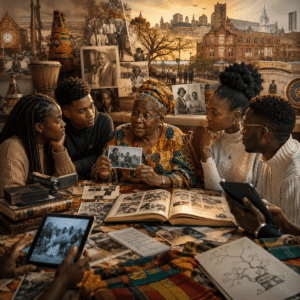
1. Elders Passing on Heritage
Description: Elderly Cameroonian community members sharing stories with young people around family photographs.
Heritage message: Oral transmission of knowledge.
Educational value: Demonstrates intergenerational learning.
Suggested location: Community centre in Greater Manchester.
Composition: Circular seating with close facial expressions.
Funding value: Illustrates community participation.
2. Ndop Textile Detail
Description: Close up of authentic Ndop patterns.
Heritage message: Symbolic communication through textile art.
Educational value: Supports interpretation of motifs.
Suggested location: Exhibition display.
Composition: High detail macro image.
Funding value: Documents intangible heritage.
3. Toghu Craftsmanship
Description: Artisan embroidery in progress.
Heritage message: Traditional skills preservation.
Educational value: Demonstrates craftsmanship.
Suggested location: Workshop setting.
Composition: Focus on hands and fabric.
Funding value: Highlights skills transmission.
4. Migration Memories
Description: Family examining passports, letters and photographs from the 1960s.
Heritage message: Migration history.
Educational value: Personalises historical research.
Suggested location: Home archive.
Composition: Overhead documentary style.
Funding value: Supports oral history collection.
5. Roots to Unity Exhibition
Description: Visitors engaging with interpretation panels and garments.
Heritage message: Public access to heritage.
Educational value: Museum learning.
Suggested location: Exhibition gallery.
Composition: Wide angle with interaction.
Funding value: Demonstrates public engagement.
6. CamFest Celebration
Description: Community members wearing traditional attire during cultural performances.
Heritage message: Living heritage.
Educational value: Community celebration.
Suggested location: Festival venue.
Composition: Dynamic crowd scene.
Funding value: Illustrates participation.
7. CamerFashion Designers
Description: Young designers presenting sustainable garments inspired by Ndop and Toghu.
Heritage message: Innovation rooted in tradition.
Educational value: Sustainable fashion.
Suggested location: Fashion showcase.
Composition: Catwalk perspective.
Funding value: Demonstrates youth engagement.
8. Oral History Recording Session
Description: Volunteer interviewing a first generation migrant.
Heritage message: Preserving lived experience.
Educational value: Research methodology.
Suggested location: Quiet interview room.
Composition: Natural documentary portrait.
Funding value: Shows archive development.
9. Digital Heritage Archive
Description: Volunteer digitising photographs and documents.
Heritage message: Long term preservation.
Educational value: Digital literacy.
Suggested location: Archive workspace.
Composition: Screen and historical materials visible.
Funding value: Demonstrates sustainability.
10. Community Portrait
Description: Multi generational group wearing a mixture of contemporary clothing and traditional Cameroonian textiles.
Heritage message: Unity across generations.
Educational value: Identity and belonging.
Suggested location: Manchester landmark.
Composition: Inclusive group portrait.
Funding value: Represents lasting community impact.