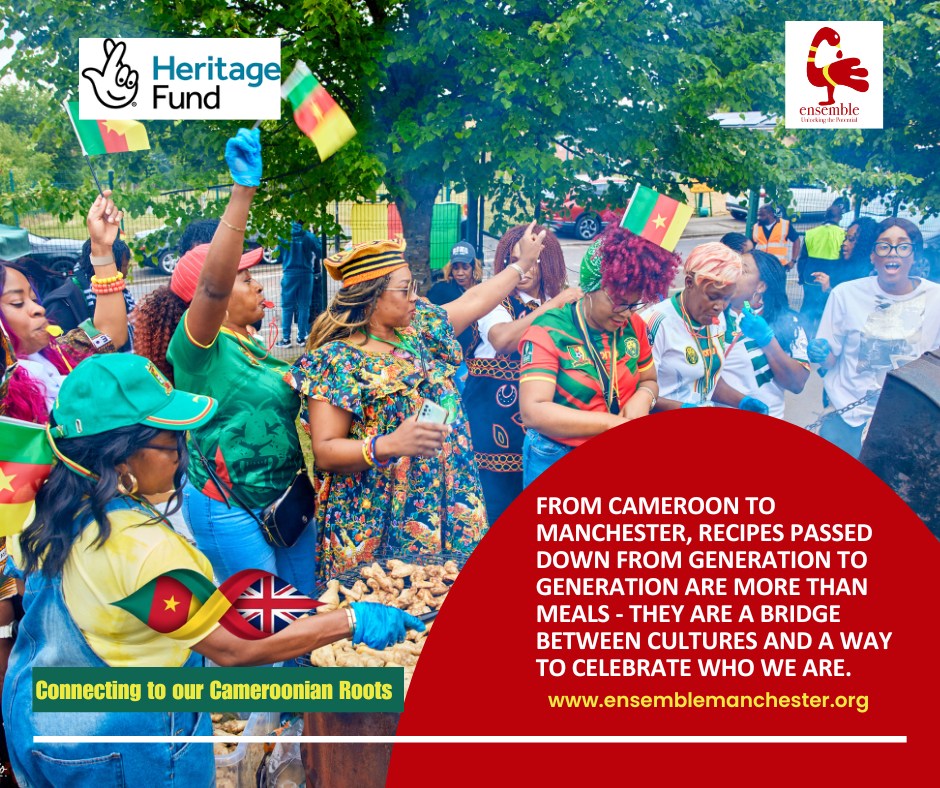
Food is not only nutrition. It is documented heritage. In schools and youth programmes, gastronomy becomes a structured entry point to identity, migration and cultural transmission.
Through the project Connecting to our Cameroonian Roots, funded by the National Lottery Heritage Fund, Ensemble Manchester integrates food heritage into educational and cultural workshops.
Each recipe carries historical and social data.
• Family migration stories
• Regional traditions from Cameroon
• Ritual and ceremonial practices
• Language embedded in culinary terminology
• Social values linked to sharing and hospitality
Our cultural workshops treat cooking as an educational activity, not a demonstration.
Young participants:
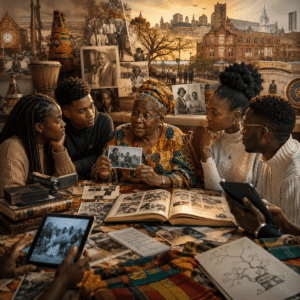
• Interview elders about traditional dishes
• Record preparation methods and ingredients
• Document the meaning behind specific meals
• Analyse how recipes evolved after migration to Manchester
This process produces structured learning outcomes.
History. Food as evidence of migration and adaptation.
Citizenship. Understanding diversity through lived experience.
Literacy. Writing and organising documented recipes and testimonies.
Cultural studies. Exploring identity through daily practices.
We collect oral histories linked to food traditions as part of our wider target of around 100 testimonies. Selected contributors participate in deeper interviews and group sessions. This strengthens comparative analysis between generations.
Workshops encourage intergenerational dialogue.
A young participant may document how a traditional dish changed due to ingredient availability in the UK. That change becomes a discussion point about identity, adaptation and continuity.
All recorded materials, texts, images and audio, will be published online with open access. Schools and youth organisations will be able to access structured documentation, not only event photos.
Example of classroom integration.
A primary class studies cultural diversity in Britain. Students examine a documented Cameroonian recipe, read the associated oral testimony and identify links between geography, climate and available ingredients. This connects food heritage with geography and history learning objectives.
These cultural workshops position gastronomy as a tool for education, dialogue and structured heritage preservation.