
History is not limited to textbooks. It lives in voices, memories and lived experiences. For schools, this history becomes a primary learning resource when it is documented, contextualised and shared with purpose.
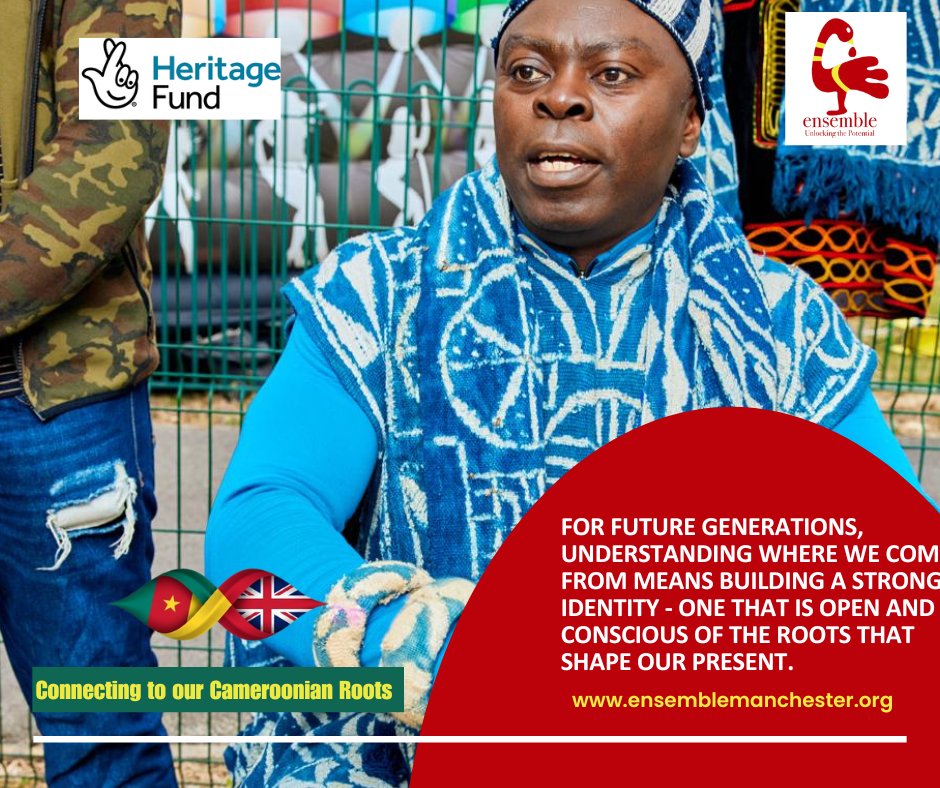
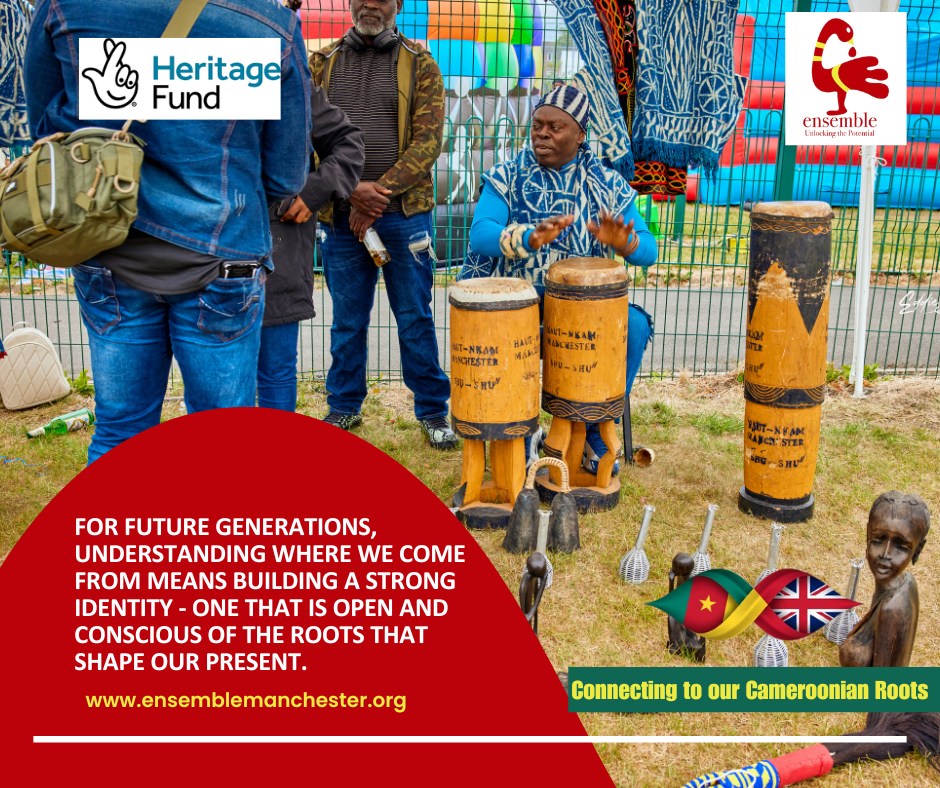
Through the project Connecting to our Cameroonian Roots, funded by the National Lottery Heritage Fund, Ensemble Manchester supports educational programmes that place community history at the centre of learning.
The project focuses on oral history as a teaching tool.
We collect and document stories from members of the Cameroonian community in Greater Manchester. These narratives cover migration, settlement, family life, culture, language and identity. They form a body of primary source material suitable for classroom use.
Our educational approach is structured.
• Young people learn interview techniques
• They document stories with consent and accuracy
• They analyse testimonies as historical sources
• They reflect on identity, belonging and migration
This process supports key learning outcomes.
History. Understanding migration through lived experience.
Citizenship. Exploring identity and community cohesion.
Literacy. Working with spoken narratives and transcriptions.
Critical thinking. Interpreting primary sources.
We aim to collect around 100 oral histories. Selected participants take part in follow up interviews and group sessions. This strengthens depth, comparison and analysis. Schools gain access to layered materials rather than isolated stories.
Workshops play a central role.
During project workshops, young people engage directly with elders. They do not receive information passively. They ask questions, record answers and organise content. This method strengthens ownership of learning and reinforces historical enquiry skills.
All digital outputs, audio, text and visual material, will be published online with free public access. Teachers can integrate these resources into lesson plans without restriction. The project website will remain available for at least five years after completion, ensuring continuity for educational use.
Example of classroom application.
A class studying migration history analyses an oral testimony recorded in Manchester. Students map the journey from Cameroon, identify push and pull factors, then compare the narrative with official historical sources. This links personal memory with curriculum content.
This project connects Cameroon and Manchester through education. It links past experiences with present realities and future understanding.
By supporting young people to document community history, we strengthen identity awareness and historical literacy at the same time.
